
Painting Vaulted Ceilings: Why Prep Comes Before the First Coat

Vaulted ceilings can make a room feel open, bright, and impressive. They can also expose every shortcut from the last paint job. When ceiling lines are crooked, seams are raised, corners are uneven, or old repairs catch the light, a fresh coat of paint will not fix the problem — it will highlight it. Interior painting on vaulted ceilings only looks finished when the surface is repaired, sanded, and primed first.
Why interior painting on vaulted ceilings fails without prep
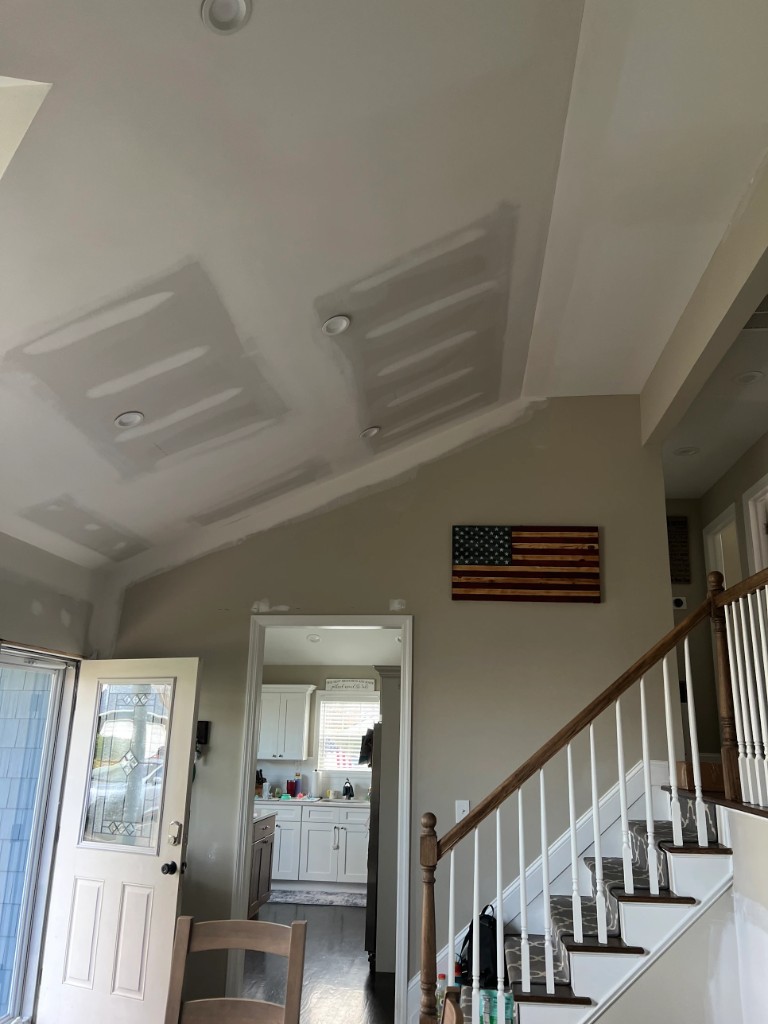
On a flat wall, a small flaw may blend into the background. On a vaulted ceiling, that same flaw becomes the first thing you notice. Height, angles, and natural light all work together to expose uneven seams, bad tape lines, cracked joints, and rough patches — especially after a new coat of paint gives the surface an even color and sheen.
Most disappointing paint jobs are prep problems. The painter rolls color over ridges, crooked ceiling-to-wall lines, and old patches without fixing them first. On a vaulted ceiling, those flaws do not disappear. They get easier to see.
- Crooked lines where the ceiling meets the wall.
- Raised seams and visible tape lines along long ceiling planes.
- Rough patches and old repairs that flash under new paint.
- Uneven transitions around recessed lights and slope changes.
- Primer and paint that lock in flaws instead of hiding them.
How we prep vaulted ceilings before painting
From visible flaws to a paint-ready vaulted ceiling
-
Find what will show through the paint
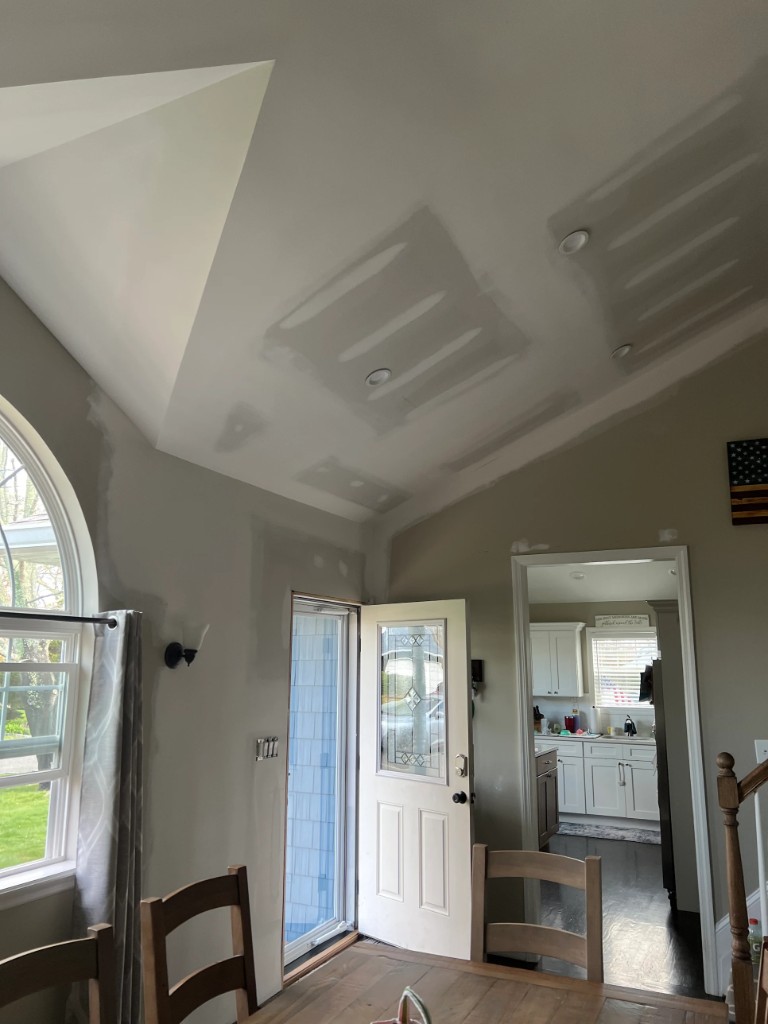
Before any primer or paint goes on, we identify the lines that will pull attention in the room — seams, corners, fastener spots, old patches, and areas where light makes uneven drywall stand out. -
Straighten ceiling-to-wall transitions
The line where the wall meets the vault has to look steady from across the room. We build up low areas, feather out rough spots, and sand the transition so the angle looks clean once primer and interior paint go on. -
Refine slopes and sightlines for a smooth finish
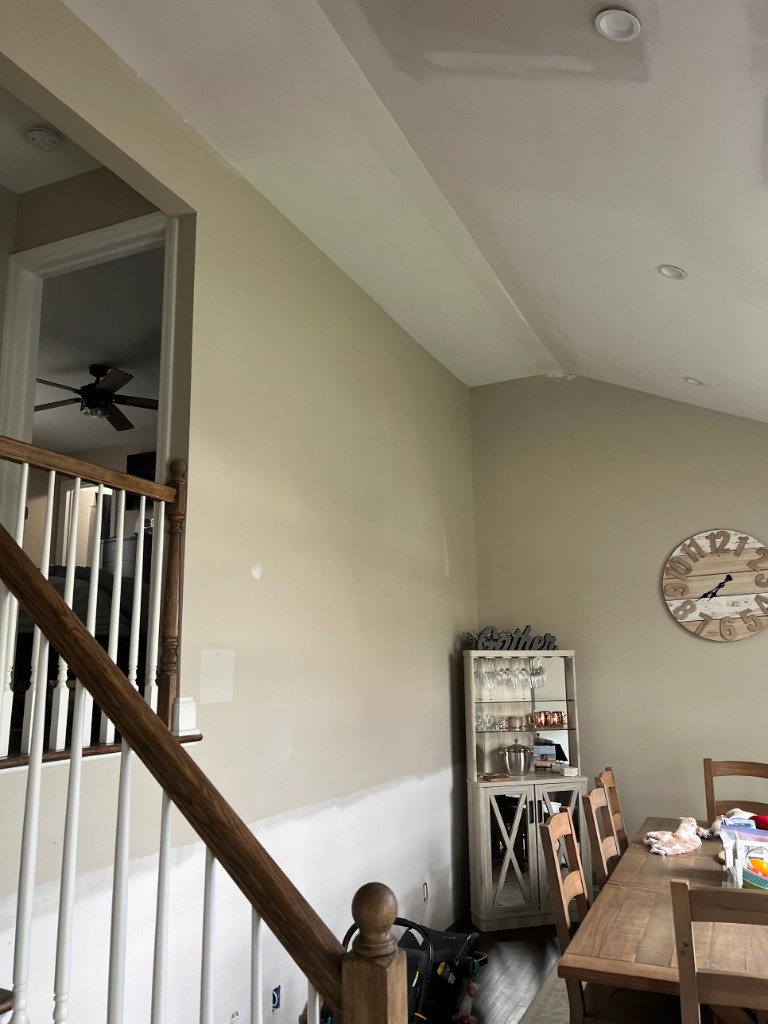
Sloped ceilings, recessed lights, and tall walls all reveal shortcuts. We smooth the surface in wider passes so repairs blend into the surrounding ceiling — no humps, stripes, or obvious patches after the final coat.
The goal is a room that feels finished
Good interior painting should not call attention to itself. The goal is for the room to feel clean, updated, and truly finished — not almost finished. That means straighter ceiling lines, smoother transitions, and a surface that is ready for primer and paint before the first roller stroke.
- Straighter ceiling-to-wall lines that hold up under natural light.
- Smoother seams and transitions across sloped planes.
- Less attention on old cracks, tape lines, and rough patches.
- Spot priming where repairs need it before the finish coat.
- A vaulted space that looks put together, not patched together.
Vaulted ceiling painting in the Memphis area
In Memphis, Germantown, Collierville, Bartlett, Cordova, Lakeland, Arlington, and nearby areas, vaulted and sloped ceilings are common in dining rooms, great rooms, and two-story entries. Tall windows and strong natural light make finishing defects hard to hide — especially after a fresh interior paint job.
We see the same pattern in older homes and recent renovations: the room gets painted before the ceiling surface is truly ready. Lines look wavy, old patches flash through the new color, and the space still does not feel finished. Prep-first interior painting fixes the surface first, then applies color on a ceiling that is actually ready for it.
FAQ
Can I just paint over flaws on a vaulted ceiling?
No. Paint will not hide crooked lines, raised seams, rough sanding, or bad patches. On a vaulted ceiling, new paint often makes those problems easier to see because it gives the surface an even sheen.
What prep does a vaulted ceiling need before painting?
It depends on the room, but most vaulted ceiling painting projects need seam and patch repair, feathering and sanding, inspection from the angles where people view the room, spot priming where needed, and protection of walls, floors, and fixtures before the finish coats.
Why do vaulted ceilings show paint flaws more than flat ceilings?
Vaulted ceilings put long sightlines on display. Slopes, peaks, recessed lights, and tall windows change how light hits the surface. A small ridge or crooked line that might hide on a flat ceiling can stand out across an entire sloped plane.
Should I hire a painter or a drywall contractor for vaulted ceiling prep?
Look for a prep-first interior painting team that handles visible wall and ceiling repair before paint — not a crew that rolls color over problems. McEvoy Pro Painters comes from drywall finishing, so we fix flaws before the first coat instead of covering them up.
Ready for vaulted ceiling painting that looks finished?
If your vaulted ceiling has crooked lines, visible seams, old patches, or a finish that never looked quite right, McEvoy Pro Painters can help. We offer interior painting with wall repair — prep, primer, and finish coats handled in the right order so the room feels clean and put together when we are done.
We serve the Memphis metro, including Collierville, Germantown, Bartlett, Cordova, Lakeland, Arlington, and nearby areas. Call 901-472-8777 for a free interior painting estimate and we will walk through what your vaulted ceiling needs before the first coat.