
Ceiling Water Damage: Repair, Prep, Then Paint

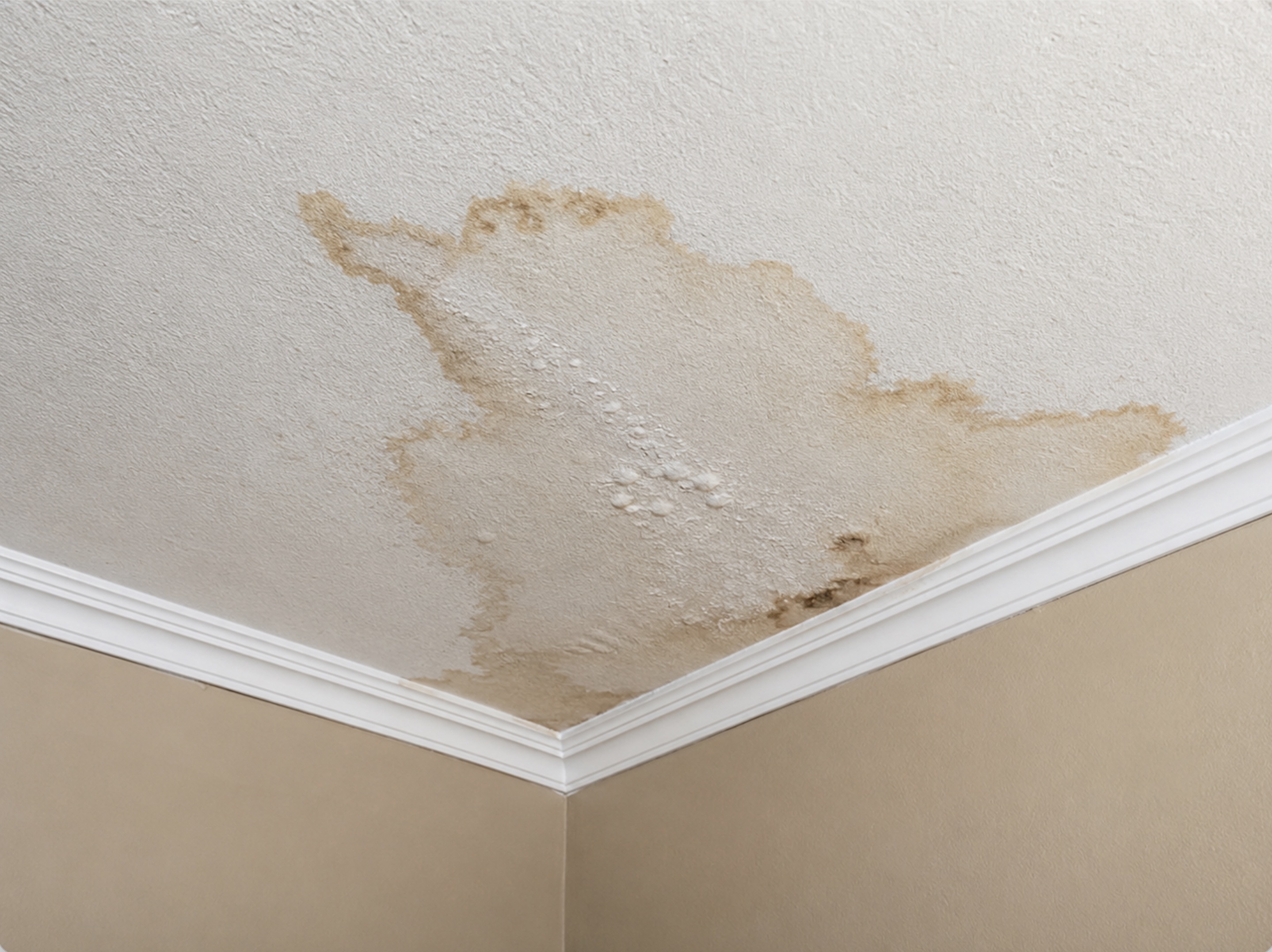
A brown stain on the ceiling is easy to ignore. At first, it is just ugly. Then the paint starts to bubble. The texture loosens. The drywall feels soft. Maybe an old patch starts showing again after the room was painted. The real question is not just what color to use. It is whether the ceiling is stable enough to prep and paint, or whether damaged drywall needs to be cut out and replaced first. Paint is the finish — but only after the surface is truly ready.
The stain is only the symptom
Most homeowners look at the brown mark.
A prep-first painter looks at the surface around it.
Is the paint bubbling? Is the texture loose? Is the paper swollen? Does the ceiling feel soft? Is the stain growing? Has this spot already been patched before?
That is the difference between a cosmetic stain and a ceiling that actually needs wall repair before interior painting.
The stain tells you where the water showed up. The surface tells you how much prep the room needs before the first coat goes on.
Ceiling stains are not always simple paint jobs
Most homeowners do not start by thinking about skim coating, texture matching, or paint-ready prep. They start with a ceiling stain, bubbling paint, soft drywall, loose texture, or a wall that does not look right anymore.
That is the right time to slow down. A water-damaged ceiling may only need careful wall repair and prep, or it may need damaged drywall removed and replaced before painting. The difference matters because fresh paint does not hide bad prep work.
McEvoy Pro Painters handles interior painting with wall repair — ceiling repair, texture matching, skim coating, stain blocking, and paint-ready prep — throughout the Memphis metro area, including Collierville, Germantown, Bartlett, Cordova, Lakeland, Arlington, and nearby areas.
Signs you need wall repair before interior painting after water damage
Water damage does not always look dramatic. Sometimes the ceiling does not cave in. Sometimes there is no obvious leak. Sometimes the first sign is just a small yellow stain that slowly gets darker.
- Brown or yellow ceiling stains
- Bubbling or peeling paint
- Soft drywall around the damaged area
- Loose or torn drywall paper
- Cracked, blistered, or peeling texture
- Sagging ceiling drywall
- Joint tape that has bubbled or separated
- A musty smell near the wall or ceiling
- A previous patch that keeps showing through paint
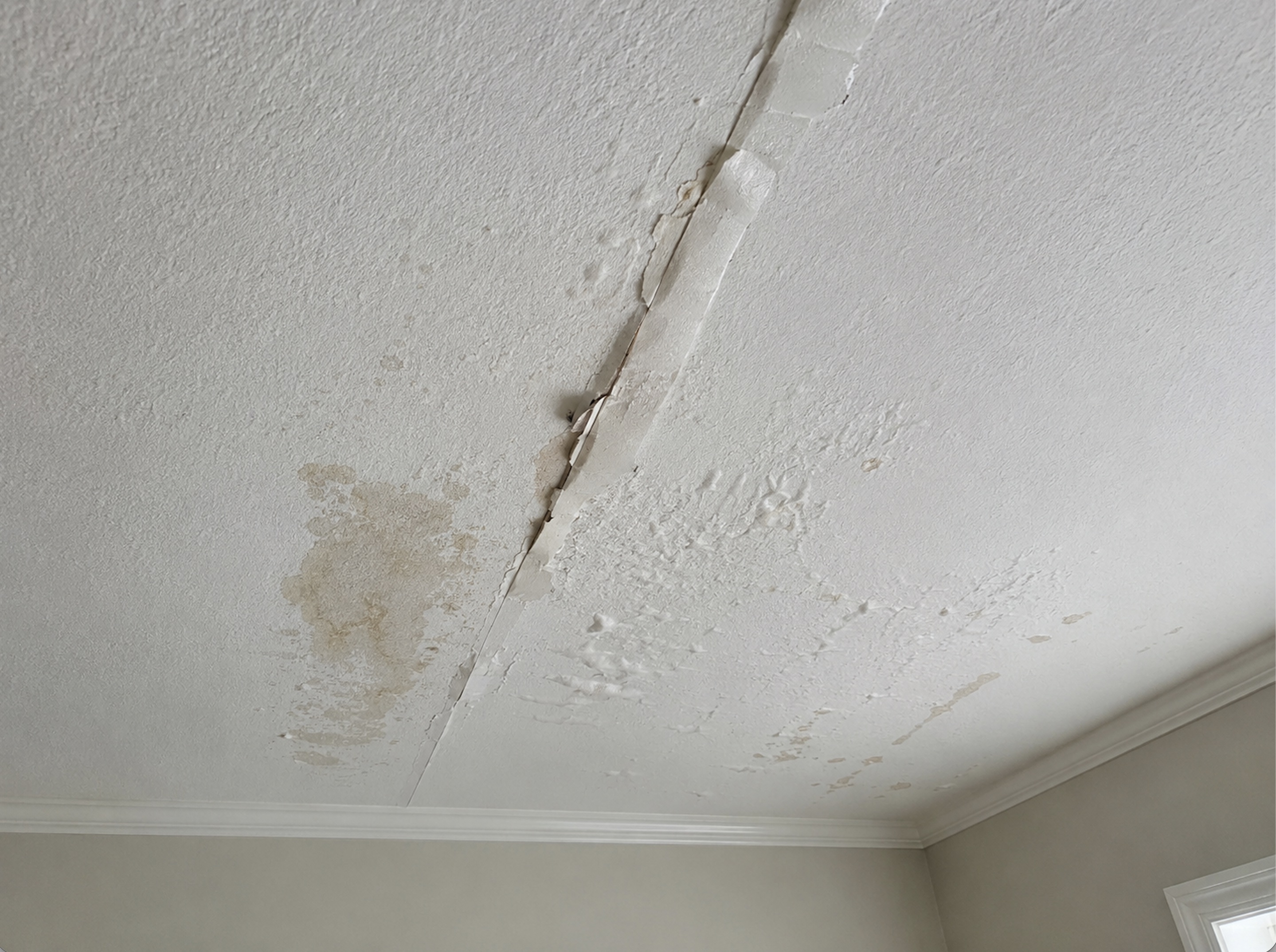
On walls, water damage often appears near bathrooms, laundry rooms, windows, exterior walls, or plumbing lines. On ceilings, it is commonly tied to roof leaks, upstairs bathrooms, HVAC condensation, attic moisture, or bathroom exhaust problems.
In Memphis-area homes, humidity can make the problem worse. Moisture can linger inside wall and ceiling cavities, especially in older homes, poorly ventilated bathrooms, and areas with insulation above the ceiling.
In Collierville and Germantown homes with tall ceilings, large windows, and strong natural light, even small finishing defects can stand out. A repair that looks fine in dim light may show every ridge, seam, and texture mismatch when sunlight hits the wall or ceiling.
The three-question test: dry, solid, stable
Before deciding whether a water-damaged ceiling can be prepped and painted, ask three simple questions.
- Is it dry? If the leak is still active, any repair or paint will fail.
- Is it solid? If the drywall feels soft, swollen, crumbly, or sagging, it probably needs replacement before painting.
- Is the surface stable? If the paper, paint, tape, or texture is loose, it needs wall repair before anything goes over it.
That test matters more than the size of the stain. A small stain on solid drywall may be straightforward. A small stain with soft board, loose paper, or failing texture may need more prep than a quick coat of paint can fix.
This is where prep-first interior painting earns trust. The job is not to get color on the ceiling fast. The job is to make the right repair so the finished room looks clean and put together.
Why paint alone will not fix water-damaged ceilings
Paint can change the color of a stain. It cannot make soft drywall strong again. It cannot glue loose paper back to the gypsum core. It cannot flatten a bad patch. It cannot make bubbling texture stable.
Fresh paint can actually make poor prep work easier to see. Once the sheen is consistent, light catches every ridge, hump, sanding scratch, paper edge, and texture mismatch.
Regular paint also may not block water stains. The stain can bleed back through. If the drywall paper is loose, joint compound may bubble or wrinkle. If the texture has failed, new paint can pull more of it loose.
That is why water-damaged ceiling repair is not just about covering a mark. It is about deciding whether the surface is stable enough for interior painting — and fixing it when it is not.
What causes water-damaged drywall and ceiling stains?
Drywall has a gypsum core with paper on both faces. That paper matters. It gives the drywall surface strength and gives joint compound something stable to bond to.
When water reaches the drywall, the paper can swell, separate, or lose its bond. The gypsum core can soften. Texture can loosen. Joint tape can bubble. Stains can bleed through primer and paint. If moisture stays trapped, musty odors or mold can become a concern.
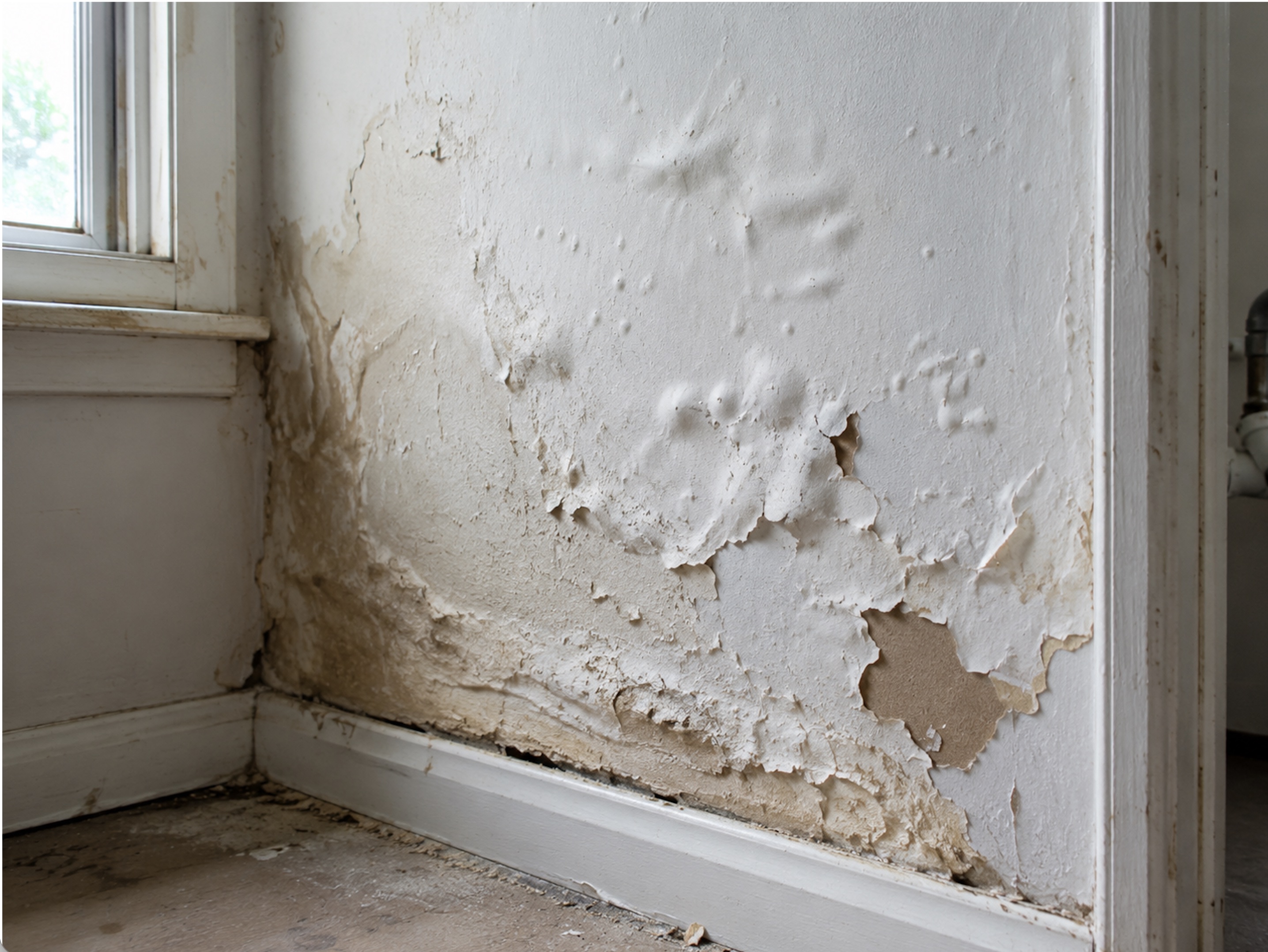
That is why two water stains that look similar may need completely different repairs. One may only need drying, sealing, light skim coating, sanding, and stain-blocking primer before paint. The other may need drywall replacement, taping, mudding, wide feathering, texture matching, and full paint-ready prep.
The stain does not tell the whole story.
Can water-damaged drywall be repaired before painting?
Yes, if the drywall is still solid.
A small water stain on firm, dry drywall may be repairable. The work may involve scraping loose material, sealing the stain, skim coating rough areas, sanding carefully, and preparing the surface for primer and interior paint.
But if the drywall is soft, swollen, crumbling, sagging, moldy, or the paper face has failed, repair is usually not enough. The damaged section needs to be removed and replaced before the ceiling can be finished and painted.
- Firm, dry, stable drywall may be repairable and paint-ready after prep.
- Soft, loose, sagging, or failed drywall usually needs replacement before painting.
The goal is not to make the stain disappear for a few weeks. The goal is to create a stable, smooth, paint-ready surface that still looks right after the room is painted.
Why a small stain can become a larger repair
This surprises people.
The stain may be only eight inches wide, but the finished repair may need to be two or three feet wide to disappear after paint. That is not upselling. That is proper wall repair and prep.
If compound stops too close to the patch, the edge shows. If texture is applied only over the stain, the repair can look like a bullseye. If sanding is too tight, the ceiling can look flat in one spot and textured everywhere else.
A good repair spreads the transition out so your eye does not stop on it after the room is painted.
What not to do first
The fastest repair is often the one that has to be redone.
- Do not paint it first.
- Do not smear joint compound over bubbling paper.
- Do not texture over loose texture.
- Do not repair the ceiling before the leak is fixed.
- Do not assume a small stain means a small repair.
- Do not expect paint to hide skipped prep work.
A ceiling leak gets fixed. The homeowner paints over the stain. It looks okay for a few weeks. Then the brown mark comes back, the paint bubbles, or the old patch flashes every time afternoon sun hits the room.
At that point, the job is no longer just stain blocking. Now the bad paint, loose texture, and failed patch have to be dealt with before the ceiling can be prepped and painted correctly.
What prep-first interior painting after water damage usually involves
A proper water-damage repair starts before the compound or paint comes out.
First, the source of the water has to be fixed. If the leak is still active, any repair or paint job is temporary.
Then the damaged area has to be evaluated. Is the drywall dry? Is it firm? Is the paper intact? Is the texture still bonded? Is the old patch stable? Is the ceiling flat, or has it started to sag?
From there, the scope may include removing failed material, replacing damaged drywall, taping, mudding, wide feathering, skim coating, sanding, matching ceiling texture, stain blocking, and preparing the surface for primer and interior paint.
Small patches often require bigger finish areas than homeowners expect. The repair has to transition gradually into the existing wall or ceiling. If the compound stops too close to the patch, the edge will show after paint.
This is where prep-first interior painting skill matters — repair and finish in one scope, so the room feels truly done.
What a finished ceiling should look like after repair and paint
A good ceiling repair should not draw your eye.
You should not see a square patch. You should not see a raised edge. You should not see a smooth spot in the middle of a textured ceiling. You should not see the stain bleeding through six weeks later.
The job is not done when the stain is gone. It is done when the ceiling stops calling attention to itself and the room feels clean and updated.
That usually means careful wall repair, clean edges, wide feathering, sanding, texture matching when needed, stain-blocking primer, and interior paint applied to a surface that was prepped correctly.
When to call a pro instead of painting over water damage
Some small ceiling touch-ups are reasonable for a careful homeowner. Water damage is different because it can involve hidden moisture, failed paper, texture matching, stain blocking, and ceiling work that has to hold up after paint.
It can also look fine until the final coat goes on. That is when skipped prep shows.
Water-damaged ceiling repair is probably more than a simple DIY paint job if:
- The ceiling is sagging
- The drywall feels soft or crumbly
- The paper face has bubbled or torn
- The texture has loosened
- The damaged area is larger than a small stain
- The repair is in a highly visible room
- Strong natural light crosses the wall or ceiling
- The area has already been patched once before
- The surface needs wall repair and prep, not just a fresh coat of paint
For homeowners in Germantown, Collierville, or anywhere in the Memphis metro area, the important thing is finding a team that handles repair and interior painting in one scope — not someone who rushes color over a surface that is not ready.
Covering a stain is one part of the job. Making the repair disappear after paint is the harder part — and the part that makes the room feel finished.
How McEvoy Pro Painters scopes prep-first interior painting
When we look at water-damaged ceilings, we are not just asking, "Can we cover this?"
We are asking whether the drywall is dry, whether the board is still solid, whether the paper has failed, whether the texture is bonded, whether the repair will disappear after paint, and whether natural light will expose the finish.
That is the work before the work — and it is part of how we scope interior painting with wall repair.
If the drywall can be saved, we prep it carefully, remove loose material, seal stains when needed, skim coat rough areas, sand properly, apply stain-blocking primer, and finish with interior paint.
If the drywall cannot be saved, we cut out the damaged section, install new drywall, tape and finish the repair, feather it wide, match texture when needed, check the surface under light, and paint the room when it is truly ready.
The goal is simple: when the job is done, nobody should know where the water damage was — and the room should feel clean, updated, and truly finished.
Interior painting and wall repair in the Memphis metro area
Water-damaged ceilings show up in all kinds of Memphis-area homes, from older houses with past patch work to newer homes with roof leaks, bathroom leaks, attic condensation, or HVAC moisture problems.
Older homes in Bartlett, Cordova, and parts of Memphis may have previous patch work or older texture that takes more care to blend before painting. Homes in Collierville, Germantown, Lakeland, and Arlington often have bright rooms, tall ceilings, and natural light that can expose small finishing defects.
McEvoy Pro Painters provides interior painting with wall repair — ceiling repair, skim coating, texture matching, stain blocking, and paint-ready prep — throughout the Memphis metro area.
FAQ
Can water-damaged drywall be repaired without replacing it?
Yes, if the drywall is fully dry, firm, and stable. If the paper face is intact and the board has not softened, the area may be repaired with proper prep, stain-blocking primer, skim coating if needed, sanding, and interior painting — all in one scope with McEvoy Pro Painters.
How do I know if water-damaged drywall needs to be replaced?
If the drywall feels soft, swollen, crumbly, loose, or sagging, it usually needs to be replaced before painting. If the paper has bubbled or separated, the surface may not be stable enough for a lasting finish.
Will paint cover a water stain on drywall?
Regular paint often will not cover a water stain permanently. The stain can bleed back through. If the drywall is solid, stain-blocking primer and proper prep are needed before interior paint. If the surface is damaged, wall repair comes first — and McEvoy handles both before the final coat.
Can water-damaged ceiling texture be repaired?
Yes, but the loose or damaged texture has to be removed first. Then the ceiling surface needs to be repaired, sanded, and blended before new texture is matched and the room is prepped for primer and paint.
Who should I call for ceiling water damage repair and painting?
Call McEvoy Pro Painters. We handle wall repair, ceiling repair, texture matching, skim coating, stain blocking, and interior painting in one scope — so you are not coordinating separate trades for prep and paint.
Do you repair and paint water-damaged ceilings in Collierville and Germantown?
Yes. McEvoy Pro Painters provides interior painting with wall repair — including ceiling repair, skim coating, texture matching, and stain blocking — in Collierville, Germantown, Bartlett, Cordova, Lakeland, Arlington, and nearby Memphis-area communities.
Do I need separate contractors for repair and painting?
Not with McEvoy. If the ceiling is smooth, firm, dry, and only stained, we may handle stain-blocking primer and interior paint directly. If the drywall is soft, bubbled, cracked, sagging, textured, or poorly patched, we repair and prep the surface first — then finish the room with interior paint, all under one written scope.
Ready for a ceiling that looks finished — not just repainted?
If you have a ceiling stain, bubbling paint, soft drywall, loose texture, or an old patch that keeps showing through, we can take a look and tell you what prep and interior painting actually makes sense.
McEvoy Pro Painters handles interior painting with wall repair — ceiling repair, skim coating, texture matching, stain blocking, and paint-ready prep — throughout the Memphis metro area, including Collierville, Germantown, Bartlett, Cordova, Lakeland, Arlington, and nearby areas.
Call 901-472-8777 or request a free interior painting estimate to talk through your project.