
10 Drywall Problems to Fix Before Interior Painting

I recently met with a couple who had paid a painting contractor to repaint their bedroom ceiling, which included complicated trim and corners. Instead of properly repairing the cracks and nail pops, the contractor spread joint compound over them and said that would solve the problem. It did not. Before long, the damage reappeared, leaving them frustrated that they would have to pay for repairs and painting again. The paint was not the problem. The surface was not ready. Whether you plan to hire an interior painter or paint the room yourself, drywall repairs should be handled professionally first. Paint is the finish, not the fix. Proper wall repair before painting creates a better result and prevents the same flaws from showing through the new color.
Why fresh paint fails when prep gets skipped
Most disappointing paint jobs are prep problems. A contractor can roll new color over cracks, nail pops, or a bad patch quickly, but those flaws do not disappear. They telegraph through the finish, especially when light moves across the wall or ceiling.
Compound skimmed over a crack without retaping, nail pops covered without refastening the drywall, or water stains painted without stain-blocking primer will fail again. That is true whether a professional painter or a homeowner applies the finish coats. Skipping proper repair wastes paint, time, and money.
- Cracks and failed joints that reopen through new paint.
- Nail pops and screw heads that push through the finish.
- Loose or bubbling tape that shows as ridges or lines.
- Bad patches that flash under an even sheen.
- Water stains and discoloration that bleed through primer and paint.
- Ridges, waves, and uneven texture that new color highlights instead of hides.
Doing repairs right once is cheaper than repainting the same room twice. That is the lesson from every homeowner who paid for a quick paint-over and had to start over.
10 drywall problems to fix before painting
The right repair depends on the problem. Walk through the room in bright light and look for these ten issues before the first coat of interior paint goes on.
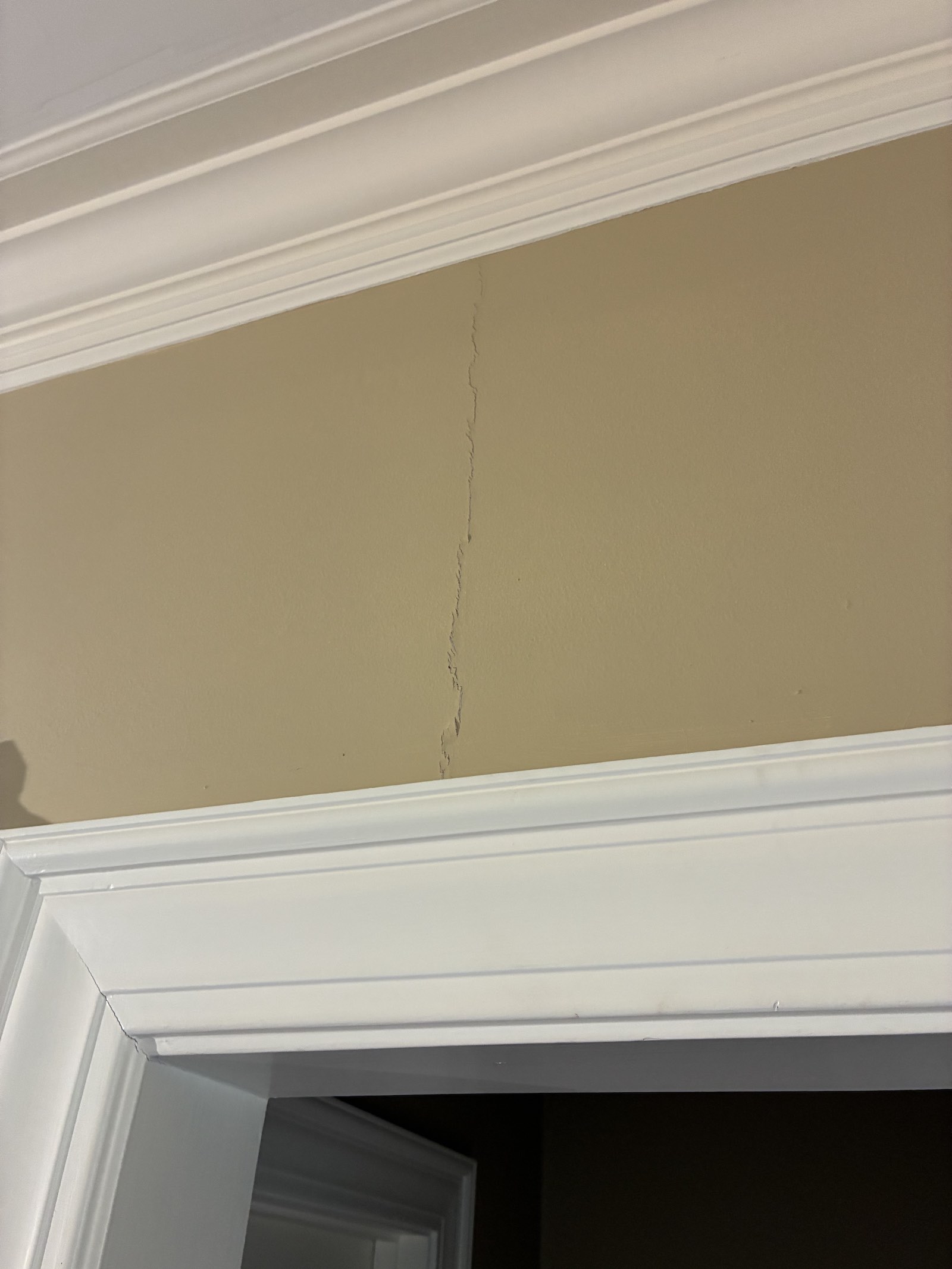
1. Cracks
A crack along a drywall joint is a failed seam, not a cosmetic line. Paint may change its color temporarily, but it will not stabilize loose compound or reinforce the joint. The crack can reopen and split the new finish.
The crack should be gouged out to remove loose material, filled with joint compound, reinforced with paper tape, and finished with wider coats that feather into the surrounding surface. Once sanded and primed, the repair should disappear beneath the paint.
See our walkthrough on how a drywall crack above a door is repaired before painting.
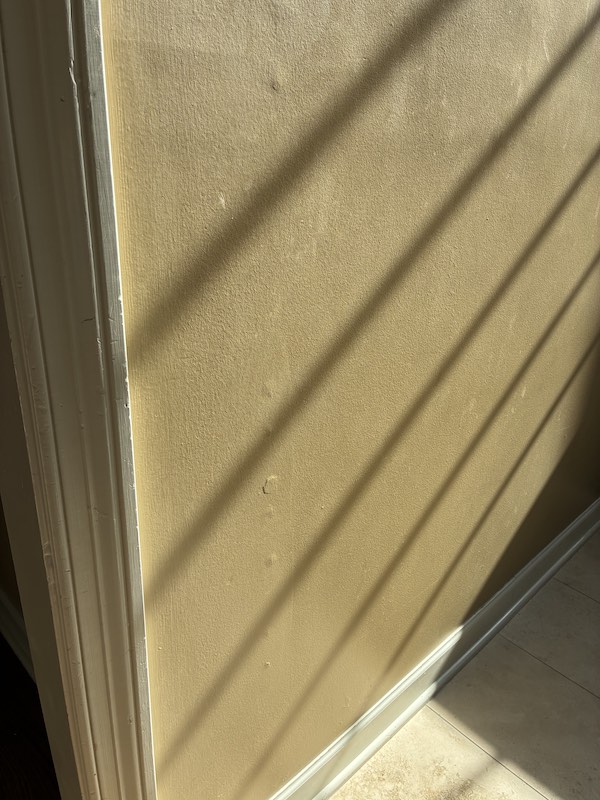
2. Nail and screw pops
A nail or screw pop means the drywall has moved away from the framing or the original fastener has failed. Rolling paint over the bump does not pull the panel tight or fix the fastener underneath.
New drywall screws should be installed near the pop and driven into the framing to pull the drywall tight. The popped fastener is removed or driven below the surface, and the screw heads and damaged area are covered with joint compound, sanded, and primed.
3. Loose or bubbling drywall tape
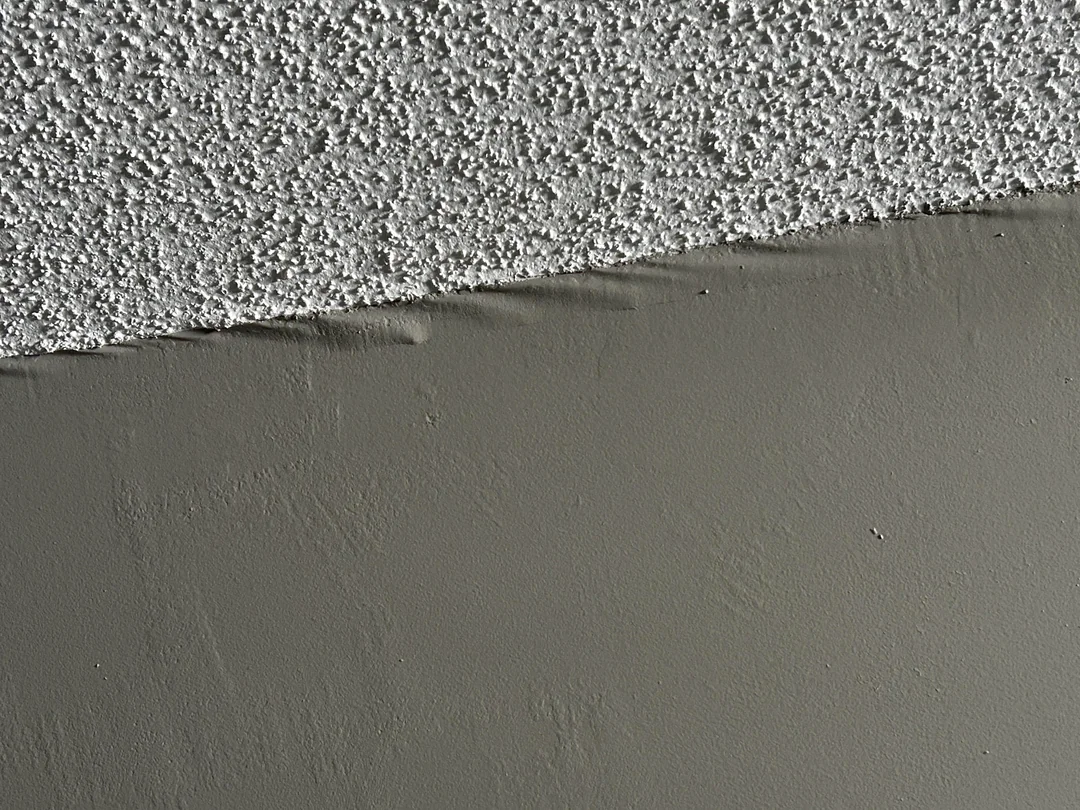
Loose or bubbling tape at a seam or corner will keep moving under new paint. Adding compound over bubbling tape traps the problem and often makes the ridge easier to see after the room is painted.
Failed tape needs to be removed rather than buried. The exposed seam should be filled, retaped, and covered with increasingly wider coats of joint compound. Proper feathering helps the repaired seam blend into the wall or ceiling.
4. Holes
The right repair depends on the size of the hole. Small anchor holes may only need joint compound, but larger openings leave unsupported edges that crack and flash under new paint if they are not properly backed and taped.
Larger holes require backing or a new piece of drywall. The patch should be taped, coated in wider layers, sanded smooth, and primed before interior painting begins.
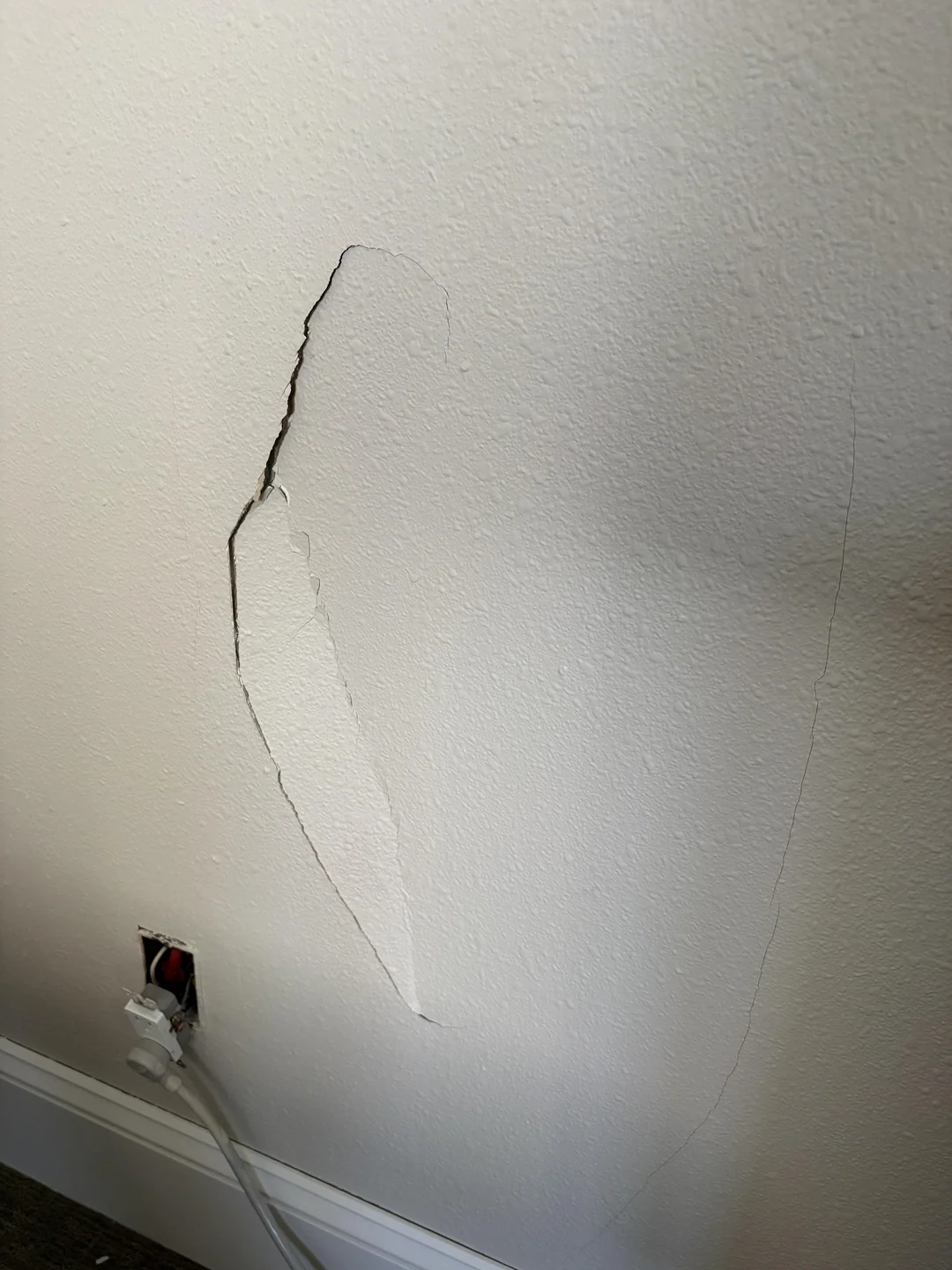
5. Dents, gouges, and torn paper
Dents and gouges need to be cleaned out and filled. Torn drywall paper is a different problem. The moisture in joint compound can lift unsealed paper and cause bubbles that telegraph through primer and paint.
Torn paper should be cut back and sealed before compound is applied. The finished repair is then feathered, sanded, and primed so the wall is stable enough for interior painting.
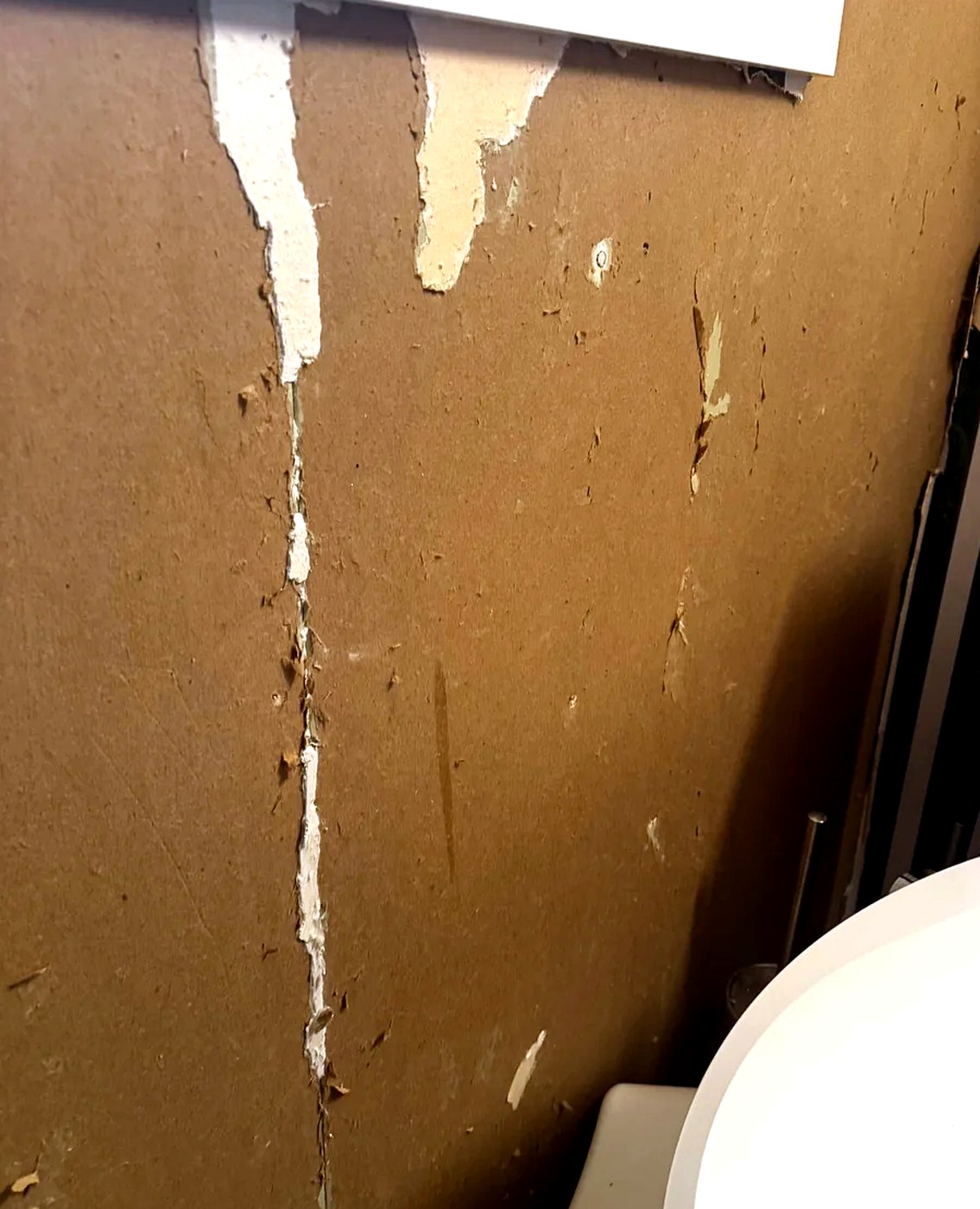
Torn paper after adhesive or wallpaper removal needs specific prep. Read why torn drywall paper must be sealed before painting.
6. Poor previous repairs
A raised patch, rough sanding, or a repair that flashes under light will not disappear under a new coat of paint. Fresh color often makes bad patches easier to see because it gives the surface an even sheen.
Raised edges may need to be sanded or scraped down, and loose compound should be removed. The patch can then be widened and feathered so it no longer stands out when light moves across the wall.
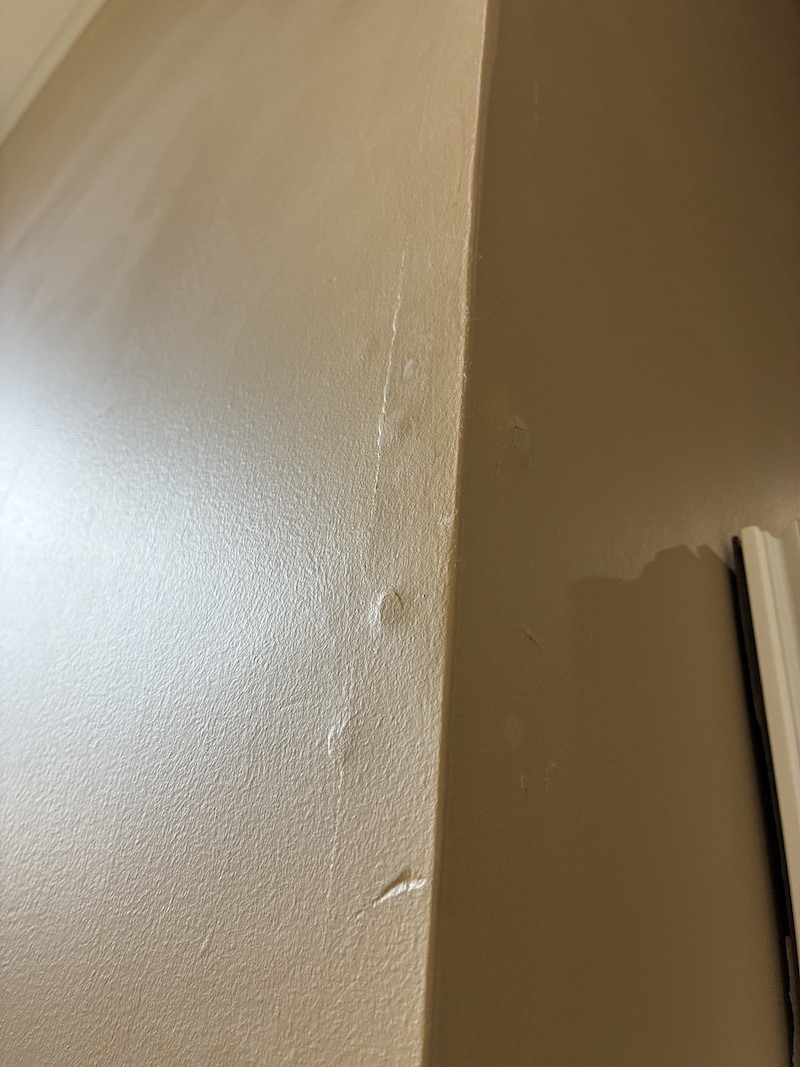
7. Damaged corner bead
Corner bead creates the straight edge along an outside corner. When it is dented, cracked, or loose, the corner line looks wavy and catches light after painting.
Damaged bead may need to be secured or replaced before compound is applied. The repair is built out along both sides of the corner, sanded, and primed so the edge looks straight from across the room.
8. Water damage and stains
A ceiling or wall stain is only the symptom. The source of the water must be fixed before the drywall is repaired. Soft, swollen, or badly damaged drywall may need to be replaced, while sound areas can often be repaired and prepped for paint.
Any remaining discoloration should be sealed with a stain-blocking primer so it does not bleed through the new paint. Skipping that step leaves a ghost mark that can reappear weeks after the room looks finished.
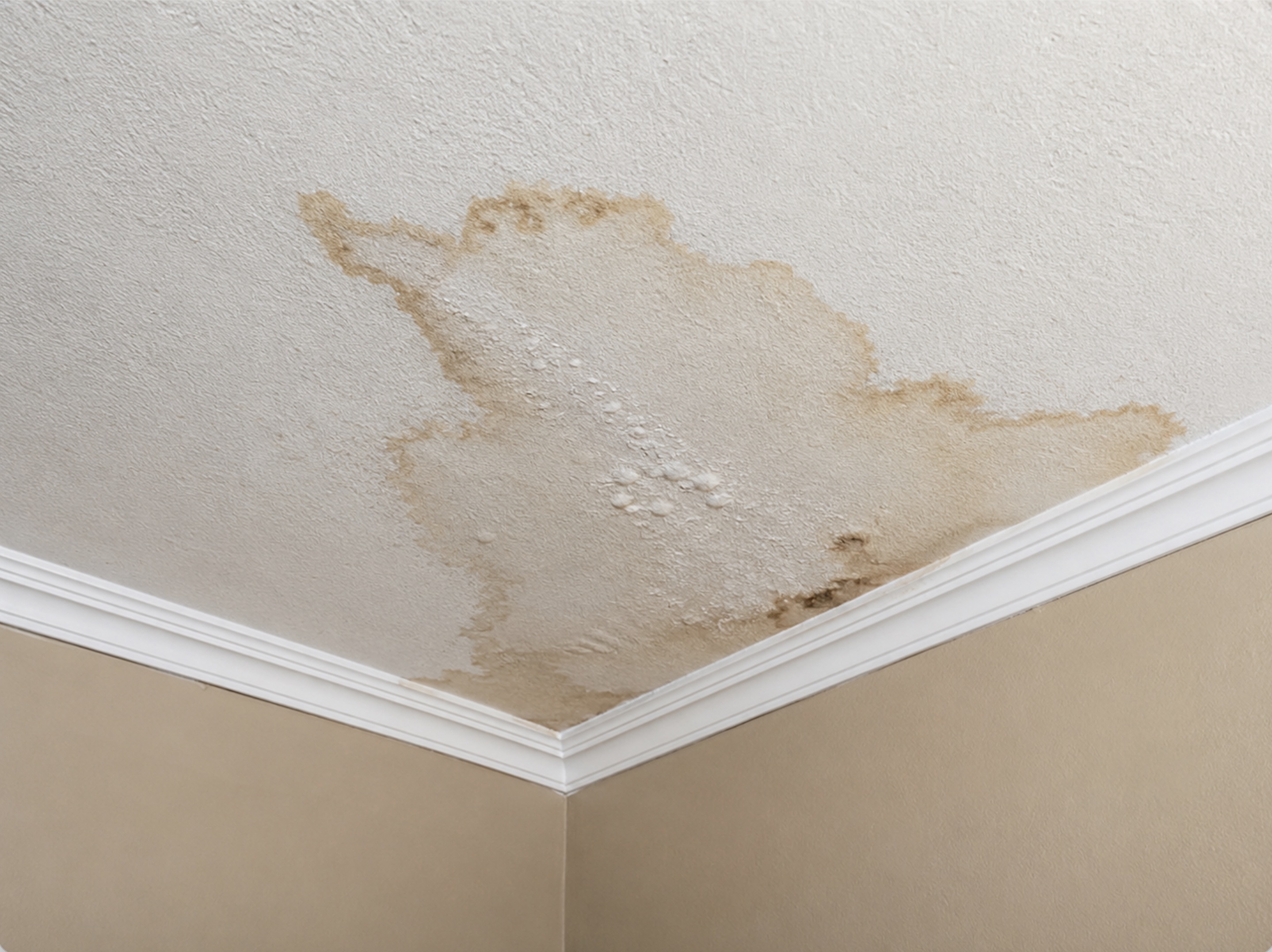
For ceiling stains and soft drywall, see water-damaged ceiling repair before interior painting.
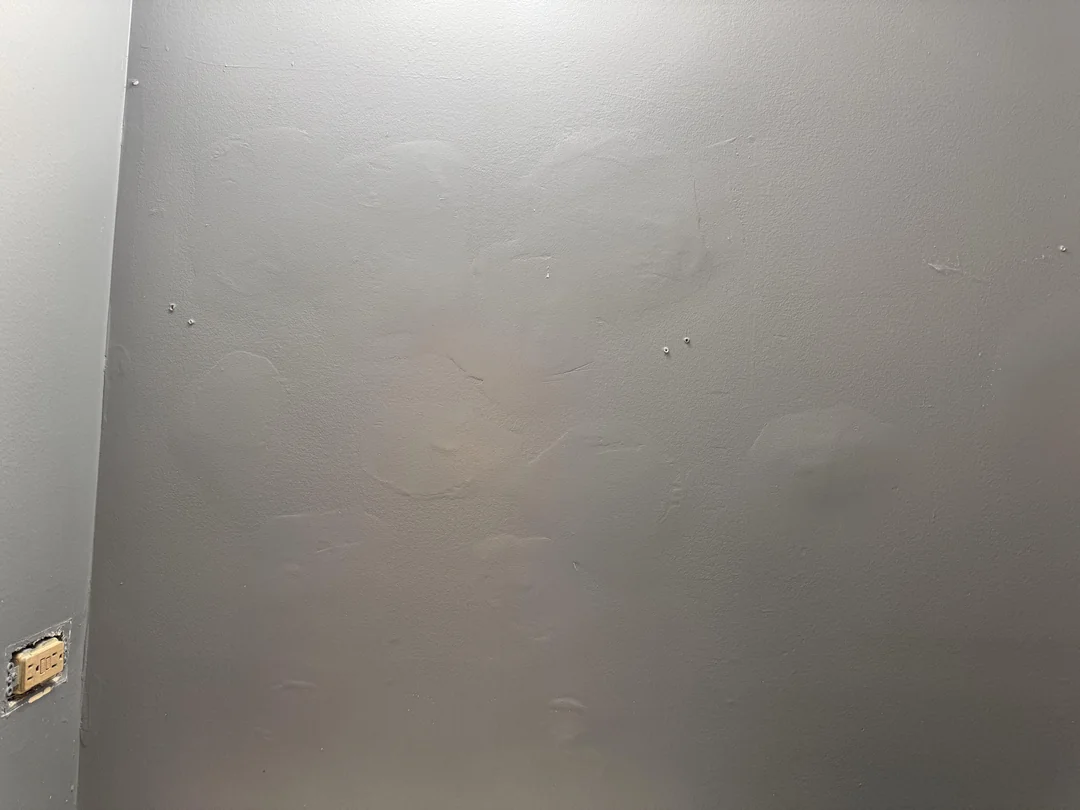
9. Heavy or inconsistent texture
Heavy or inconsistent texture can remain visible through new paint, especially on ceilings and tall walls where light rakes across the surface. Trying to match small sections of old texture often leaves obvious transitions.
Skim coating the entire affected area with joint compound creates a more uniform surface. After sanding and priming, the wall or ceiling is smoother and ready for interior painting.
10. Uneven walls and ceilings
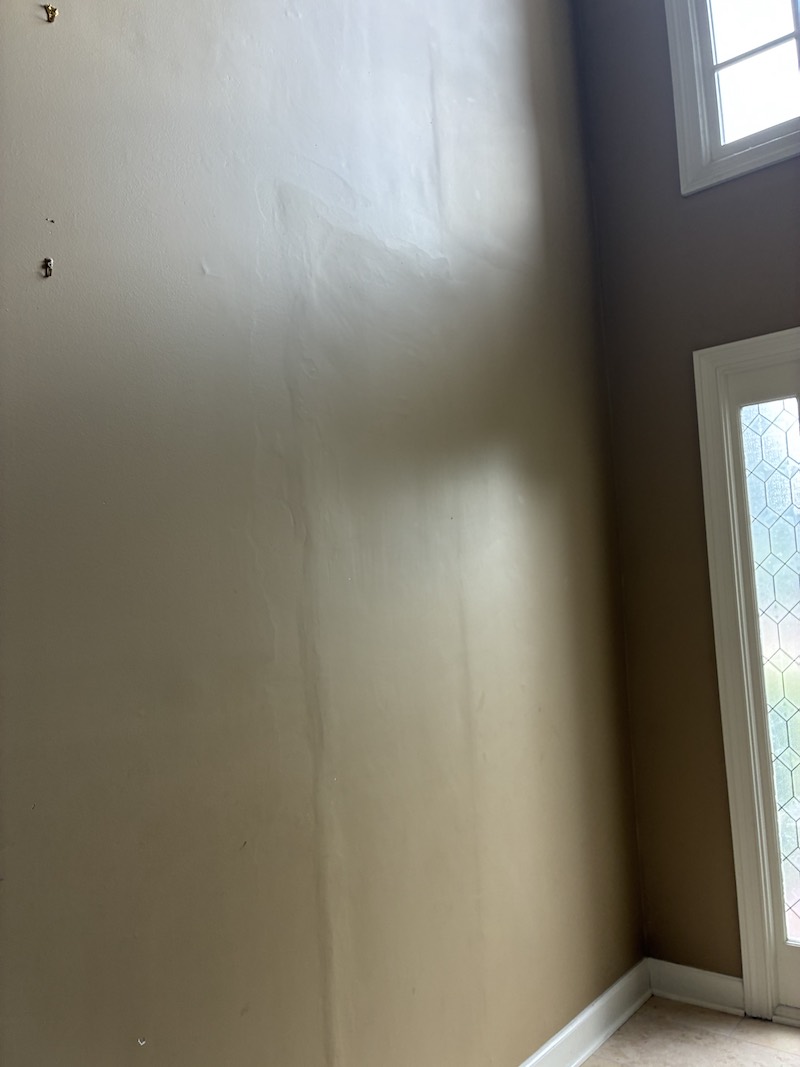
Paint will not flatten ridges, waves, old adhesive residue, or widespread surface damage. On vaulted and cathedral ceilings, long sightlines make every ridge and wave easier to see after a fresh coat.
High spots may need to be scraped or sanded, while low or uneven areas may require skim coating. The work should be checked under strong lighting, sanded smooth, and primed before painting.
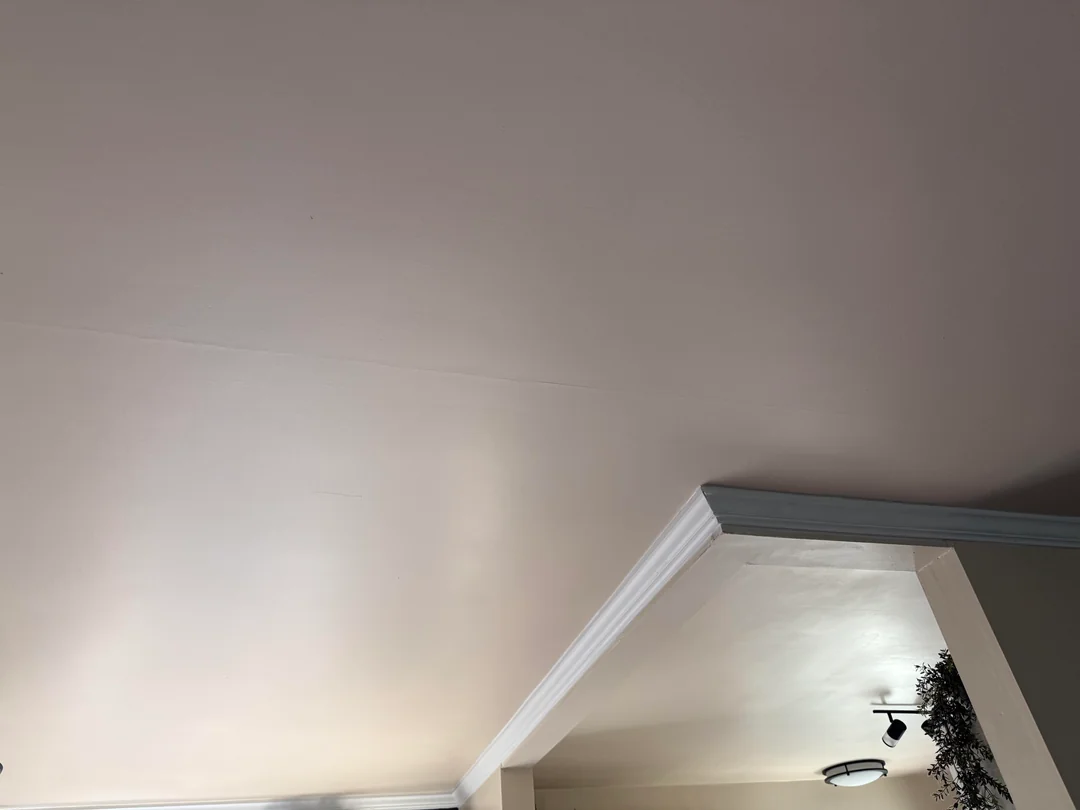
Ceiling ridges and crooked lines are common on vaulted ceiling interior painting projects where prep was skipped.
Before you pick up a brush
Walk through the room in bright light and look at the walls and ceiling from different angles. Make sure every crack, patch, seam, stain, and ridge is handled before you open the paint.
- Cracks along joints and corners.
- Nail and screw pops.
- Loose or bubbling tape.
- Holes and damaged patches.
- Dents, gouges, and torn paper.
- Bad previous repairs that flash under light.
- Damaged corner bead.
- Water damage and stains.
- Heavy or inconsistent texture.
- Ridges, waves, and uneven surfaces.
Fixing flaws before the first coat is cheaper than paying for the same room twice. That applies whether you hire a painter or plan to roll the color yourself.
If you want to paint the room yourself but need help with the drywall work, McEvoy Pro Painters can repair, skim, and spot-prime the walls and leave them paint-ready. If you prefer one contractor for prep and paint, we also offer complete interior painting with wall repair.
Either way, doing it right once is cheaper than paying for the same room twice.
How McEvoy Pro Painters scopes prep-first interior painting
Most disappointing paint jobs are prep problems. The drywall work is not separate from the quality of the paint job. It is what makes a clean, finished result possible.
When we scope a repaint, we walk the room, identify visible flaws, and define the repairs needed before the first coat. That gives you one clear written scope instead of coordinating separate drywall and painting contractors for the typical wall repair included in the project.
For homeowners who plan to paint themselves, we can handle wall repair, skim coating, sanding, and spot priming at room-repaint or larger interior scale, then leave the walls paint-ready for your finish coats. For homeowners who want the full job handled, we include the same prep plus interior painting in one scope.
- Cracks along drywall joints, including above doors and windows.
- Nail pops, screw pops, and small dents.
- Loose or failed tape at seams and corners.
- Bad previous patches that flash through paint.
- Spot priming, sanding, and feathering so repairs disappear after the finish coat.
- Skim coating and texture work where the surface needs to be uniform before paint.
This service is best suited to homeowners planning to repaint a room, several rooms, or a larger portion of the interior, including those who will paint themselves once the walls are ready. It is not aimed at one small standalone drywall patch.
Interior painting and wall repair in the Memphis metro area
In Memphis, Germantown, Collierville, Bartlett, Cordova, Lakeland, Arlington, and nearby Shelby County communities, interior painting projects often involve older homes, previous patch work, and strong natural light that exposes finishing defects.
Humidity, settling, and past shortcuts show up as cracks, nail pops, failed tape, and rough patches that a fresh coat of paint will not fix. Prep-first interior painting addresses the surface first, then applies color on walls and ceilings that are actually ready for it.
FAQ
Can I just paint over cracks and nail pops?
You can, but it usually does not work for long. Paint may change the color of the line or bump temporarily, but it will not stabilize a failed joint, refasten loose drywall, or flatten a raised repair. The flaw can telegraph through the new finish, especially once light hits the wall at an angle.
Will joint compound alone fix these problems?
Compound alone is rarely enough. Cracks along seams need tape to bridge the joint. Nail pops need new screws to pull the drywall tight. Torn paper needs sealing before mud goes on. Water stains need stain-blocking primer. Compound fills low spots, but it does not replace the structural steps that make a repair stable under paint.
Is it worth paying for professional drywall repair if I plan to paint myself?
Yes, especially when you are repainting a room or larger interior. Proper repair, feathering, and spot priming are skill-heavy. Bad prep wastes your paint and your weekend, and you may still end up hiring someone to fix what shows through. McEvoy Pro Painters can handle wall repair and leave the room paint-ready so you can apply finish coats on a surface that will actually look finished.
Do I need a separate drywall contractor and a painter?
Not with McEvoy Pro Painters. We handle wall repair, sanding, spot priming, and interior painting in one scope, or prep-only at room-repaint scale if you plan to paint yourself. Prep does not get rushed or skipped between trades.
Why did my last paint job fail so quickly?
Fresh paint does not fix failed joints, loose tape, or bad patches. It follows them. If the previous contractor skimmed over cracks, skipped retaping, or painted over stains without stain-blocking primer, the same flaws can reopen or bleed through weeks after the room looked done.
How do I know if my walls are paint-ready?
Walk the room in bright light from multiple angles. Cracks, pops, ridges, flashing patches, and stains should be repaired, sanded smooth, and spot-primed. The surface should look uniform before you open the paint. If flaws still pull your eye, the wall is not ready for interior painting yet.
Ready for walls that look finished, not just repainted?
If you are preparing to repaint and your walls have cracks, nail pops, loose tape, bad patches, stains, or uneven texture, McEvoy Pro Painters can help. We offer interior painting with wall repair, or prep-only at room-repaint scale if you plan to paint the room yourself once the surface is ready.
McEvoy Pro Painters handles wall repair, skim coating, spot priming, and interior painting throughout the Memphis metro area, including Collierville, Germantown, Bartlett, Cordova, Lakeland, Arlington, and nearby communities.
Call 901-472-8777 or request a free interior painting estimate to talk through your project.